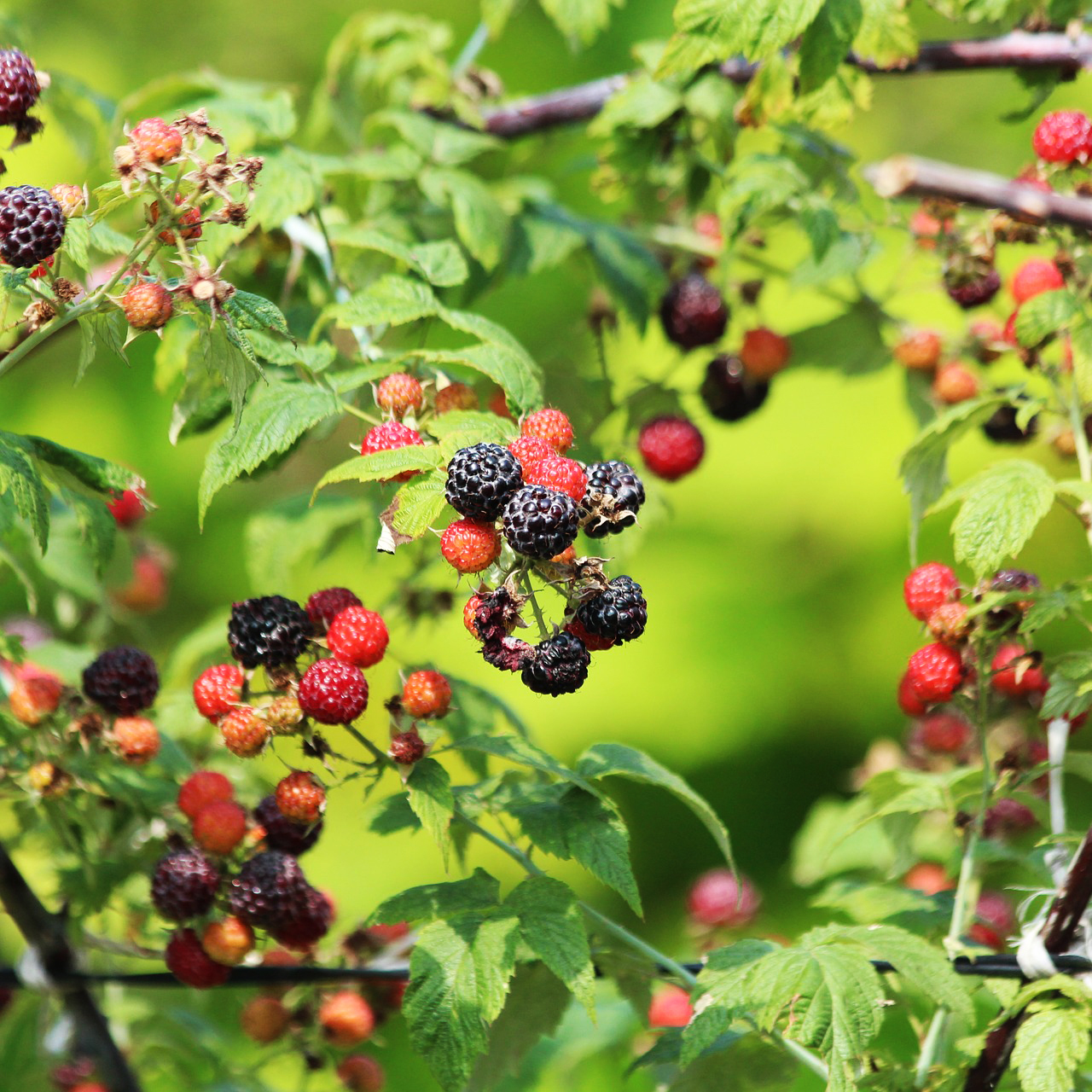
Black raspberries (Rubus occidentalis) are quite different from the blackberries we see in the grocery store. Blackberries have a soft and solid center, whereas black raspberries are hollow when plucked because they are separated from their stem. Black raspberries are also smaller and sweeter than blackberries, making it a favorite for many wildlife species.
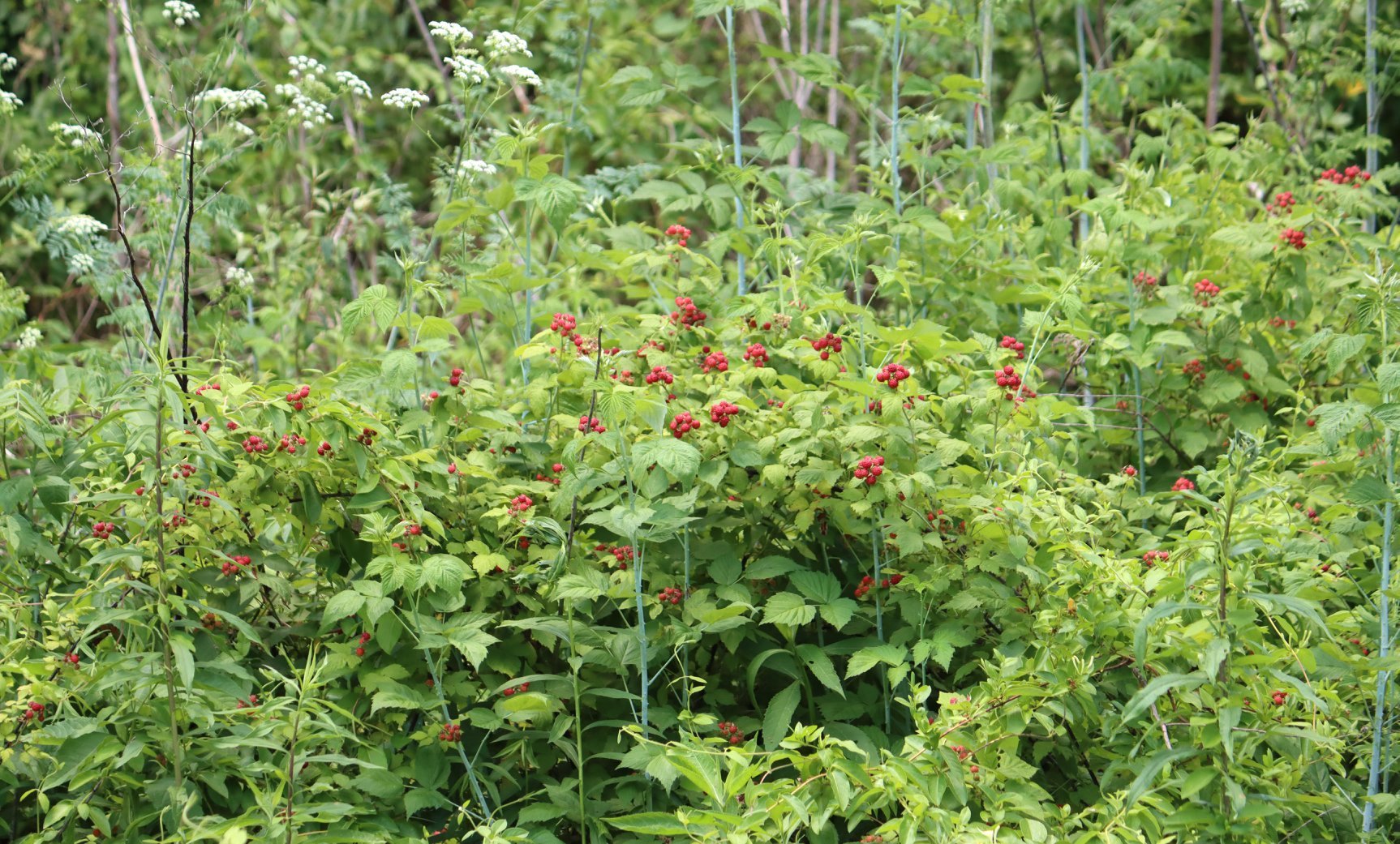
Habitat:Native to eastern and midwestern North America, black raspberry is found growing in disturbed areas, requiring an acidic soil with a pH of less than 6.8. The plant helps with soil erosion, serving as ground cover and holding dirt together with its roots.
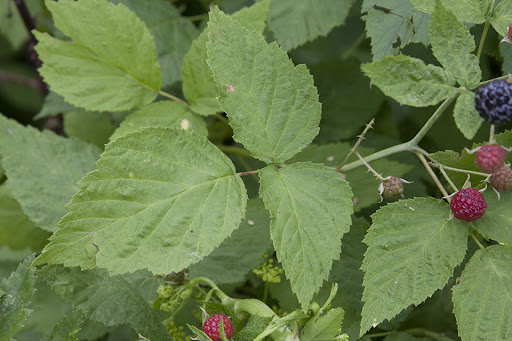
Form: It is a fast-growing plant that reaches 3 to 8 feet tall and 6 to 12 feet wide at maturity. Its leaves are pinnate, with 3-5 leaflets growing on mature stems.
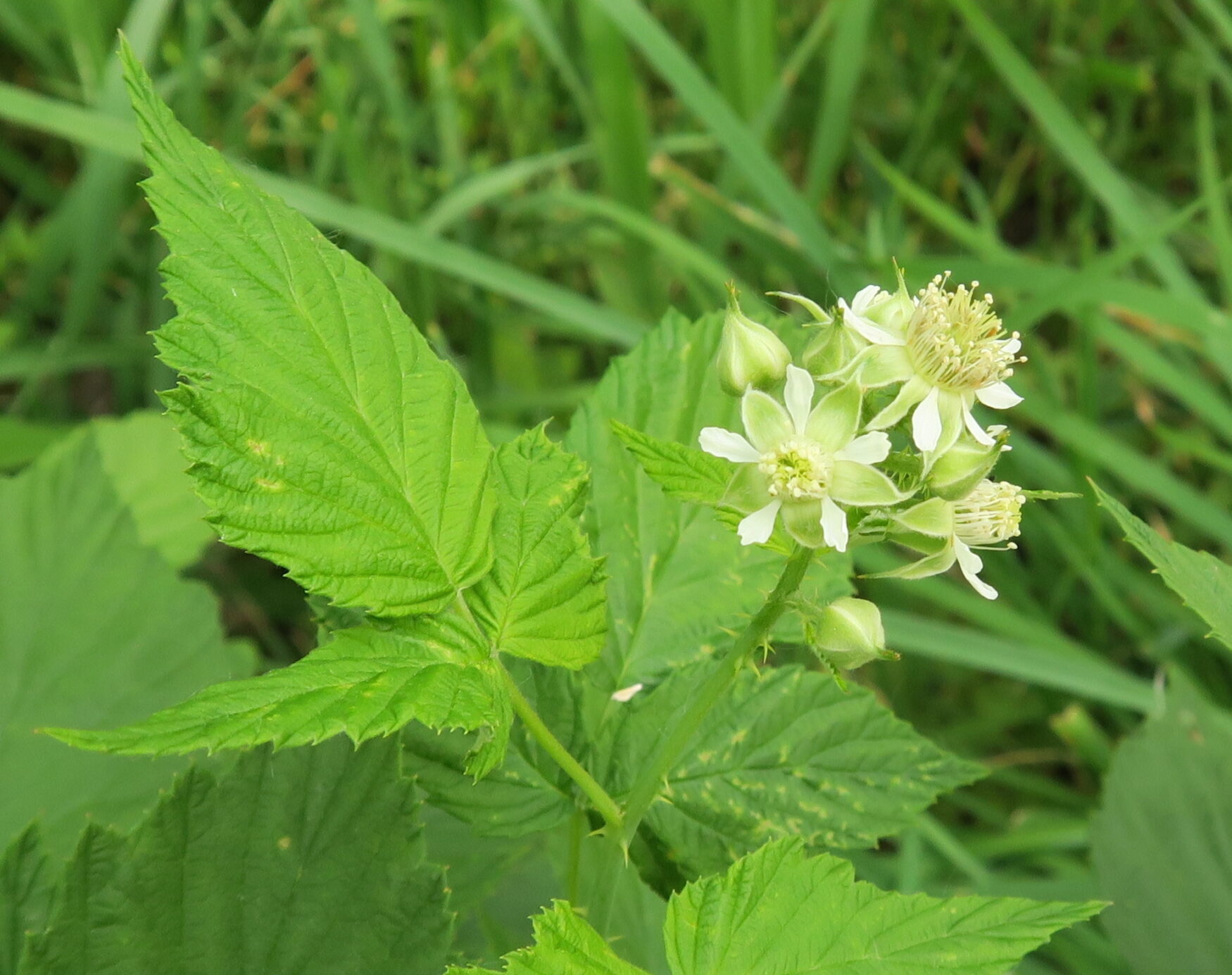
Flowers and Fruit: Between April and June, it blossoms into white, flat-topped clusters of 5-petaled flowers. Once pollinated, the flowers develop into fruit, usually in June or July. Upon ripening, the fruit goes from red to a deep purple, almost black color.
Faunal Associations: The sweet nectar of the flowers strongly attracts bees, like honeybees, bumblebees, and mason bees. Both the fruit and the foliage is consumed by many mammals, such as black bears, rodents, and birds. It’s a staple in the diet of at least 150 different bird and mammal species!
Did you know? An Ohio State University study found that black raspberries may help fight cancer! The berries contain natural chemicals that can protect DNA and starve tumors by blocking their blood supply. While eating the berries alone won’t prevent cancer, a study comparing two groups of rodents found that those fed dehydrated black raspberries showed positive effects on 462 out of 2,261 cancer-related genes. These genes control cell growth, death, movement, and blood vessel formation, all of which play a role in cancer formation.