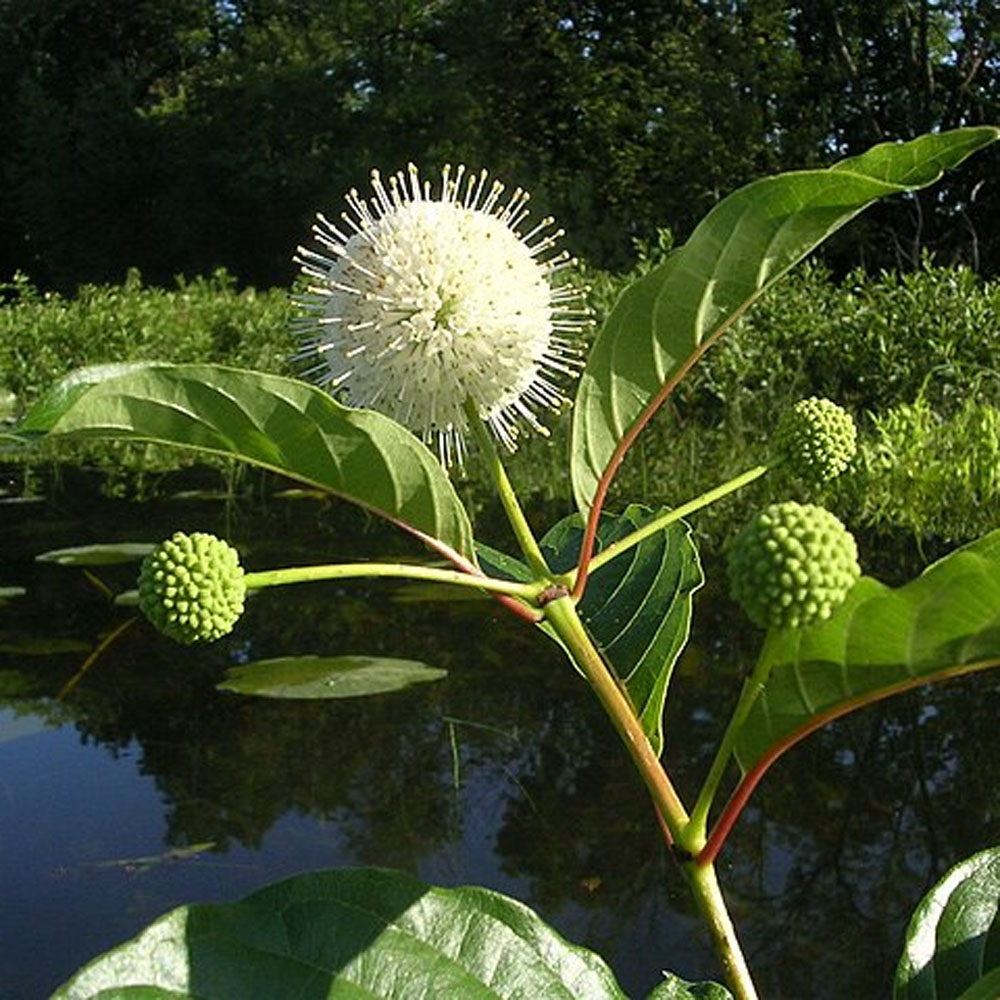
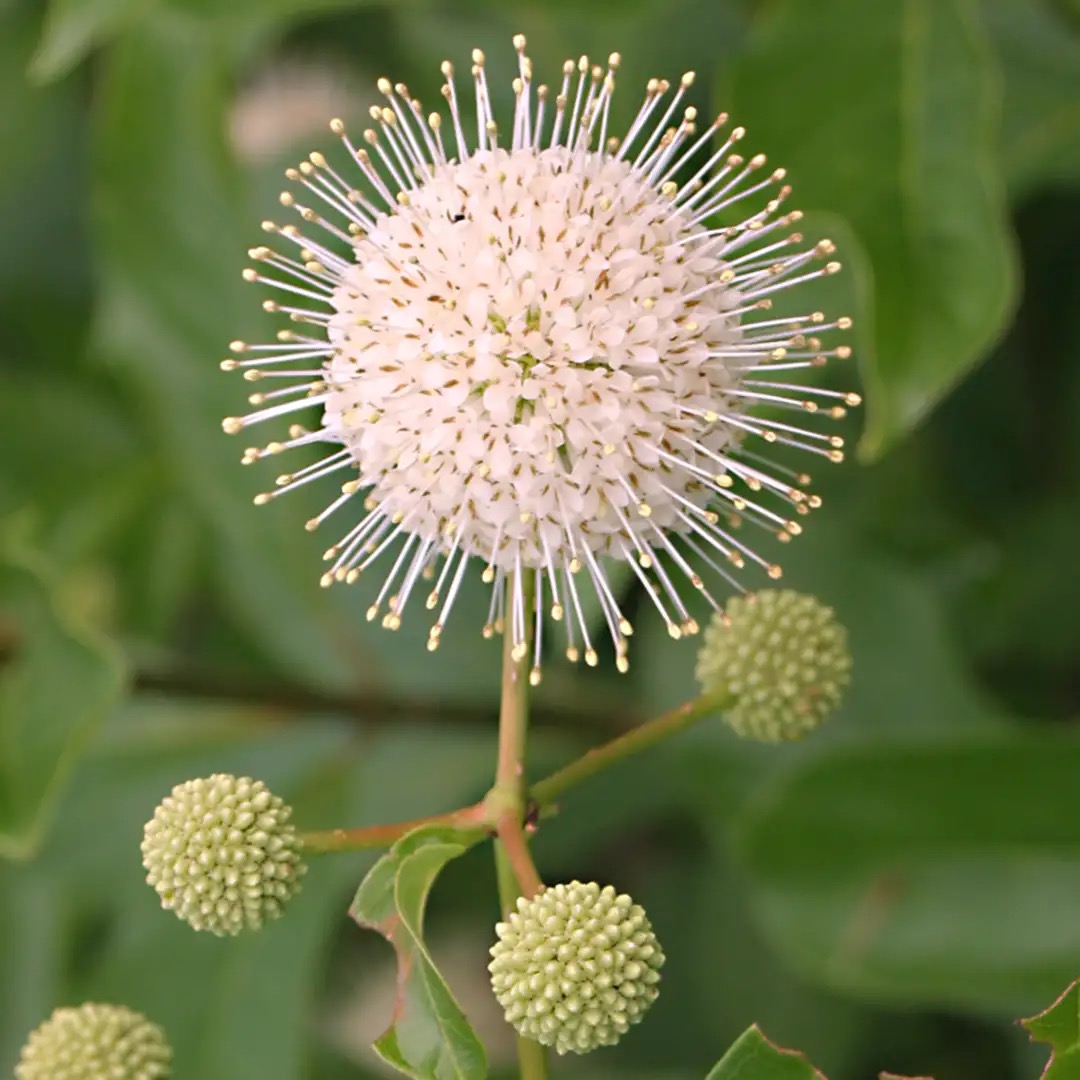
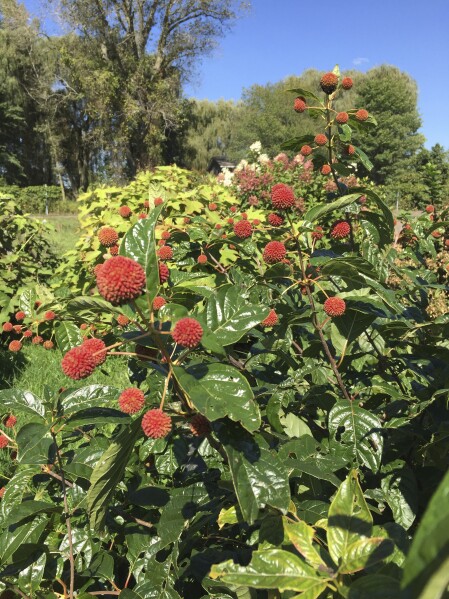
Buttonbush (Cephalanthus occidentalis) goes by many names, such as buttonball, honey bells, globe flower, and button willow.The plant is characterized by its flower heads: spherical clusters of small, white flowers.
Habitat: This shrub is common in many wetland habitats, such as swamps and marshes. It ranges from Northeastern Maine to Southern Mexico, remaining abundant on the east coast. Buttonbush is known to be very tolerant of flooding, and can be used for erosion control in areas with poor drainage.
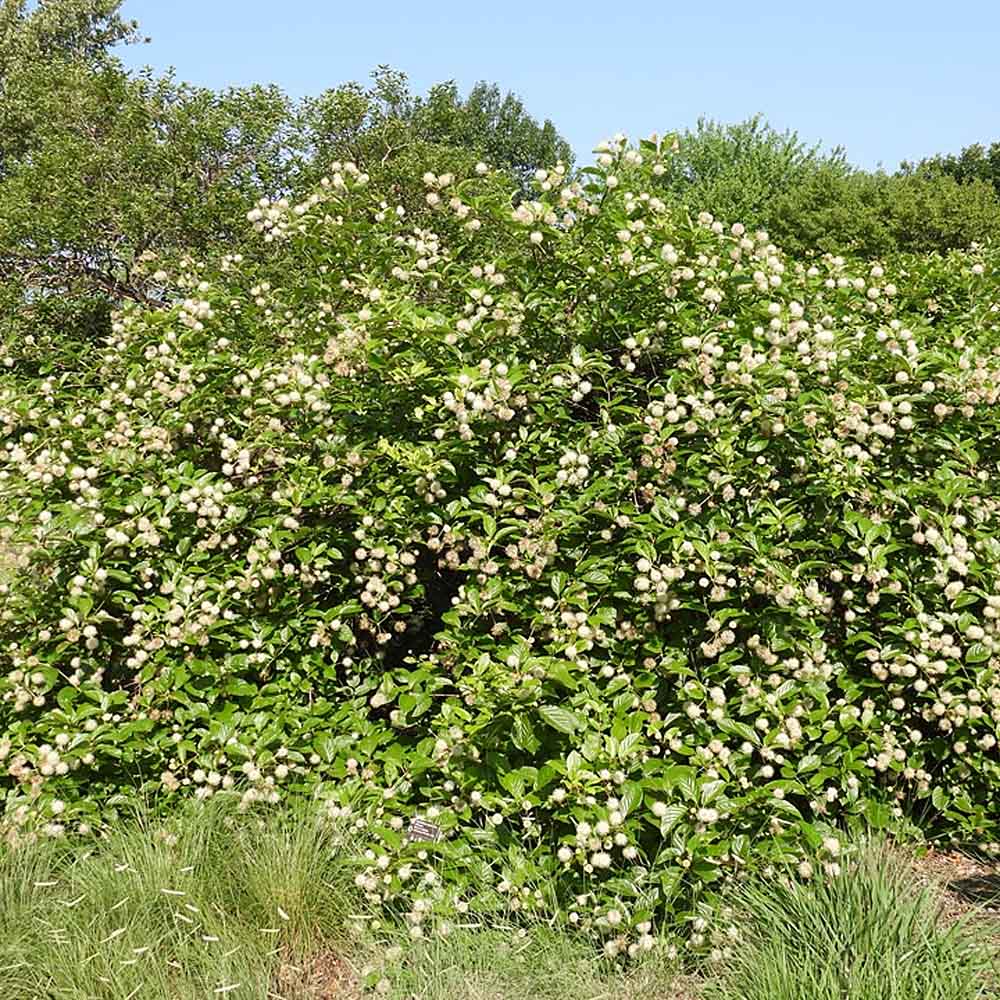
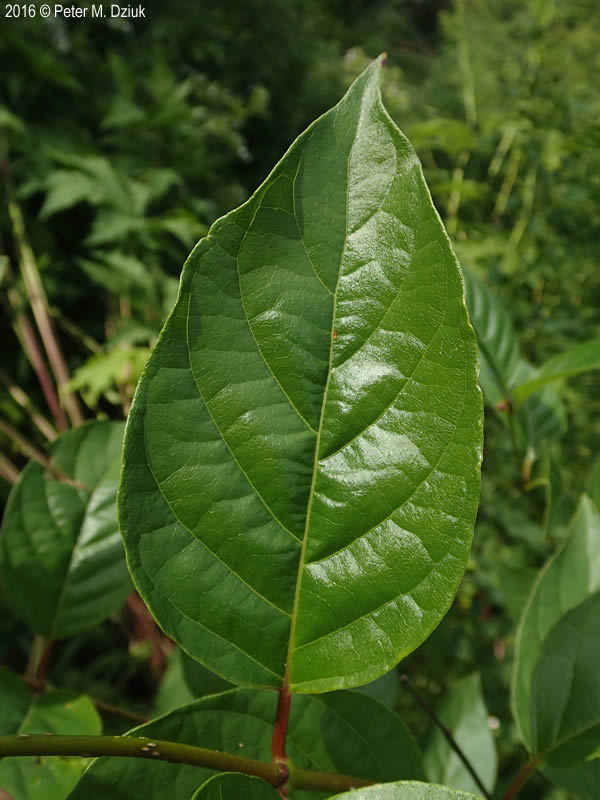
Form: Buttonbush is a warm-season shrub that’s 6 to 12 feet tall and 5 to 8 feet wide. Its leaves are whorled and vary in length, ranging from 2 to 8 inches long. Although the plant is considered a shrub, it can be pruned into a small tree shape.
Flowers and Fruit: Its flowers are small, white, and 1-inch spherical clusters that are held on long stems. After the flowers are fertilized by pollinators, the plant develops button-like seed heads. As the season approaches autumn, the fertilized flowers develop into hard and red spherical fruits. Buttonbush fruit is a type of nutlet, which is a technical term for a small nut.
Faunal Associations: Many species of waterfowl consume buttonbush fruit. In the northeastern United States, white-tailed deer often munch on the foliage. Buttonbush also serves as a host plant for a variety of moths, such as the titan sphinx (Aellopos titan) and the hydrangea sphinx (Darapsa versicolor).
Did you know? Buttonbush is a pioneer species, meaning it is one of the first organisms to colonize a bare area. After flooding submerges and washes away vegetation, buttonbush is one of the first plants to sprout. It establishes itself in rotting logs and stumps.