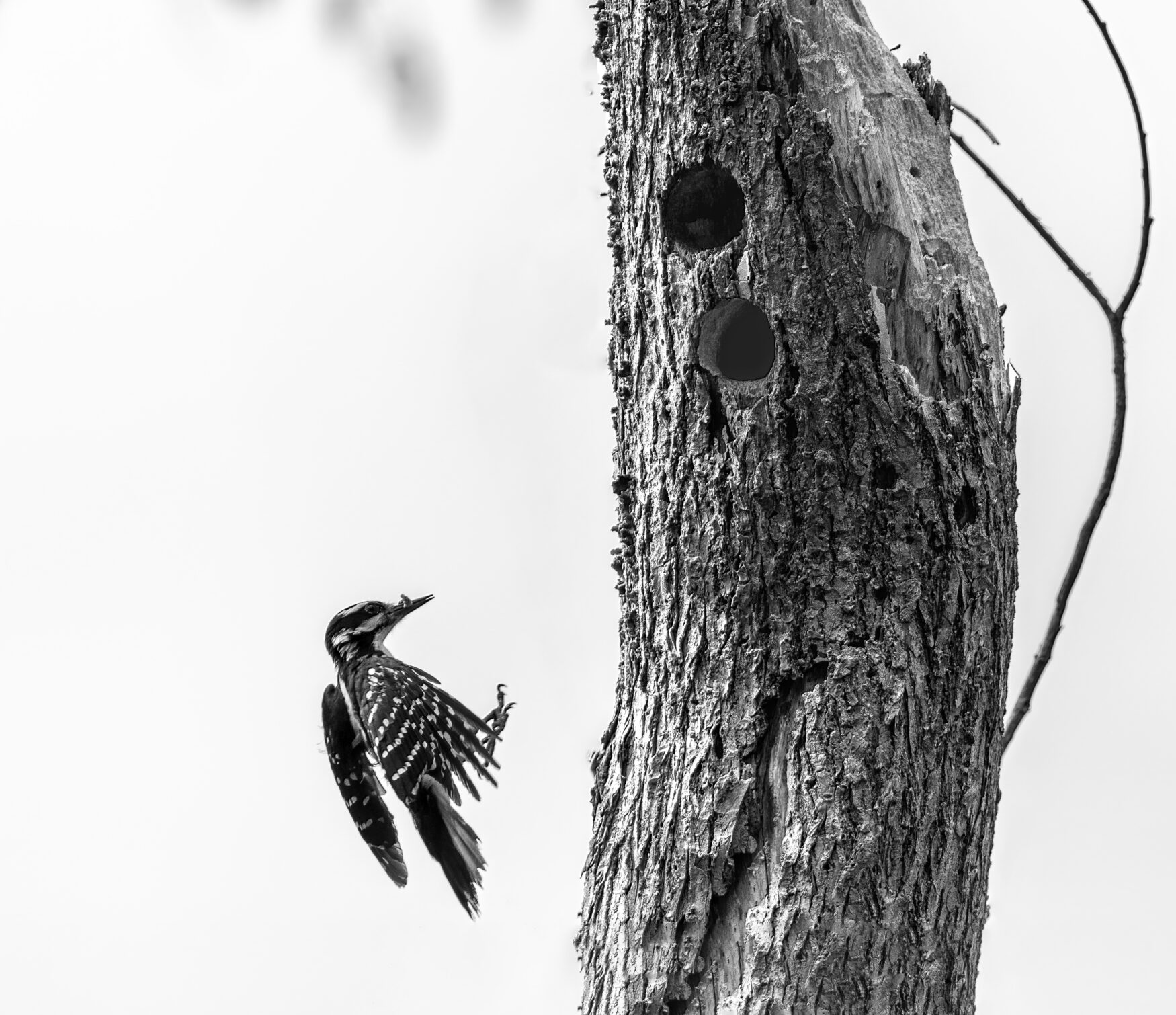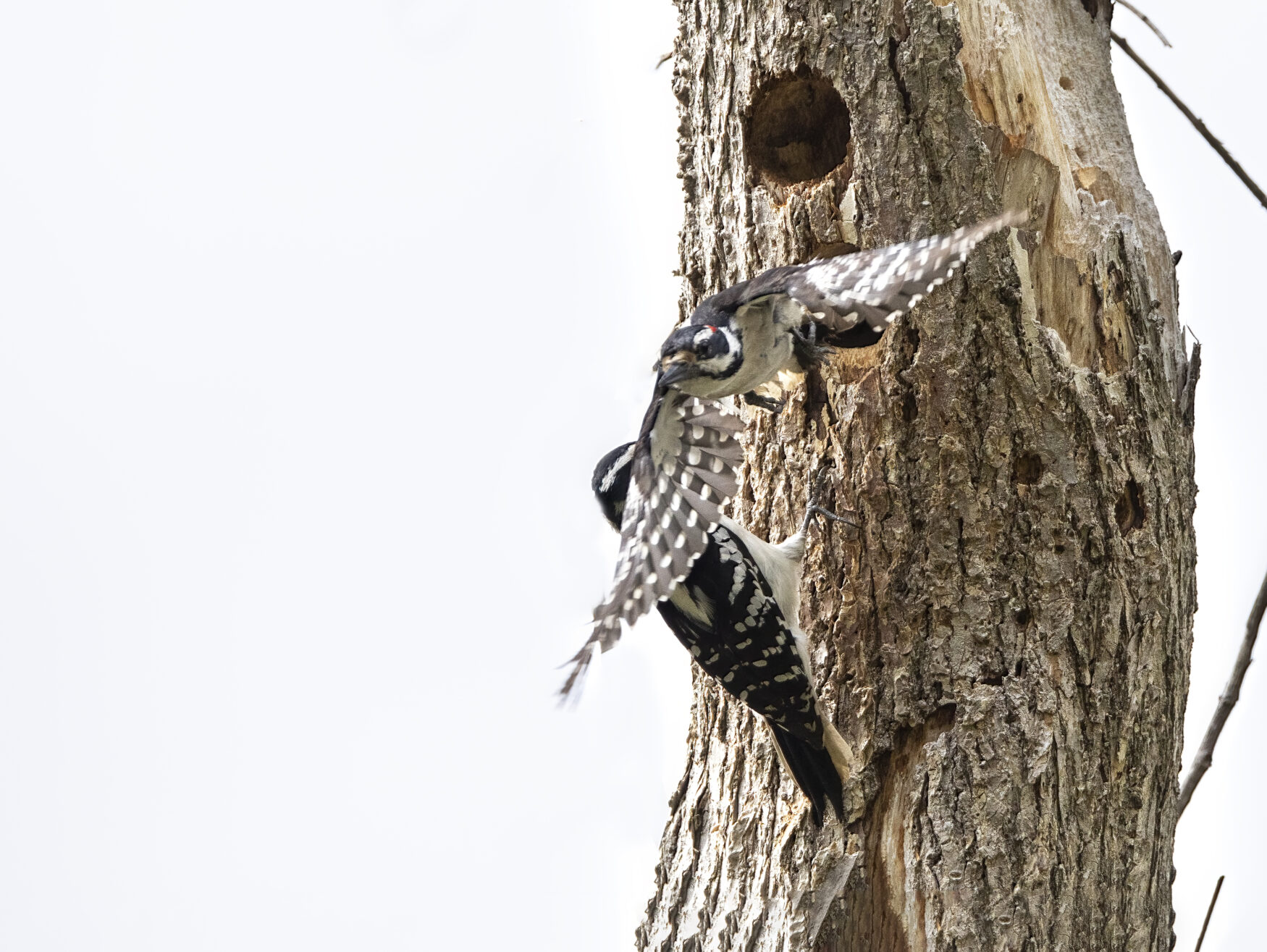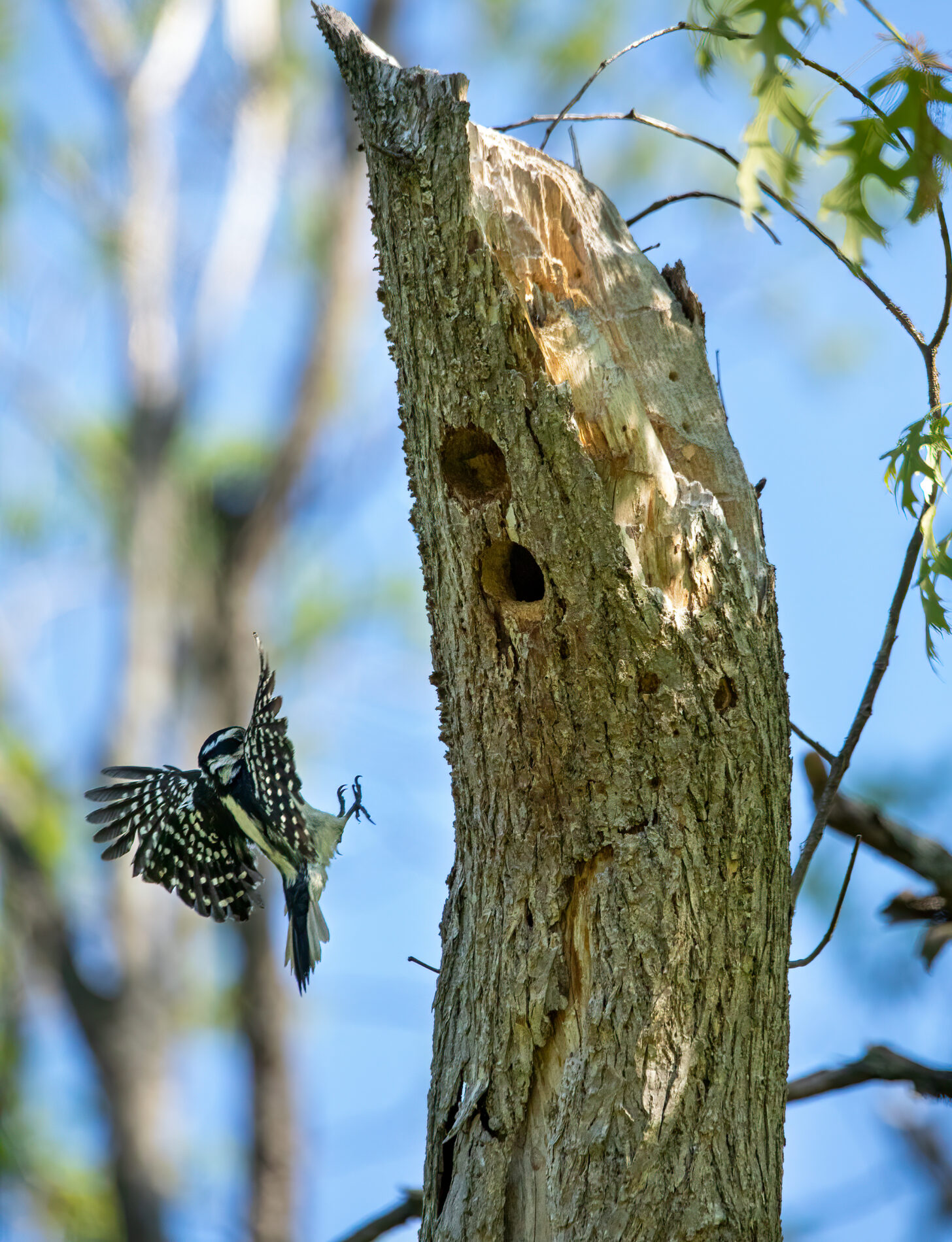
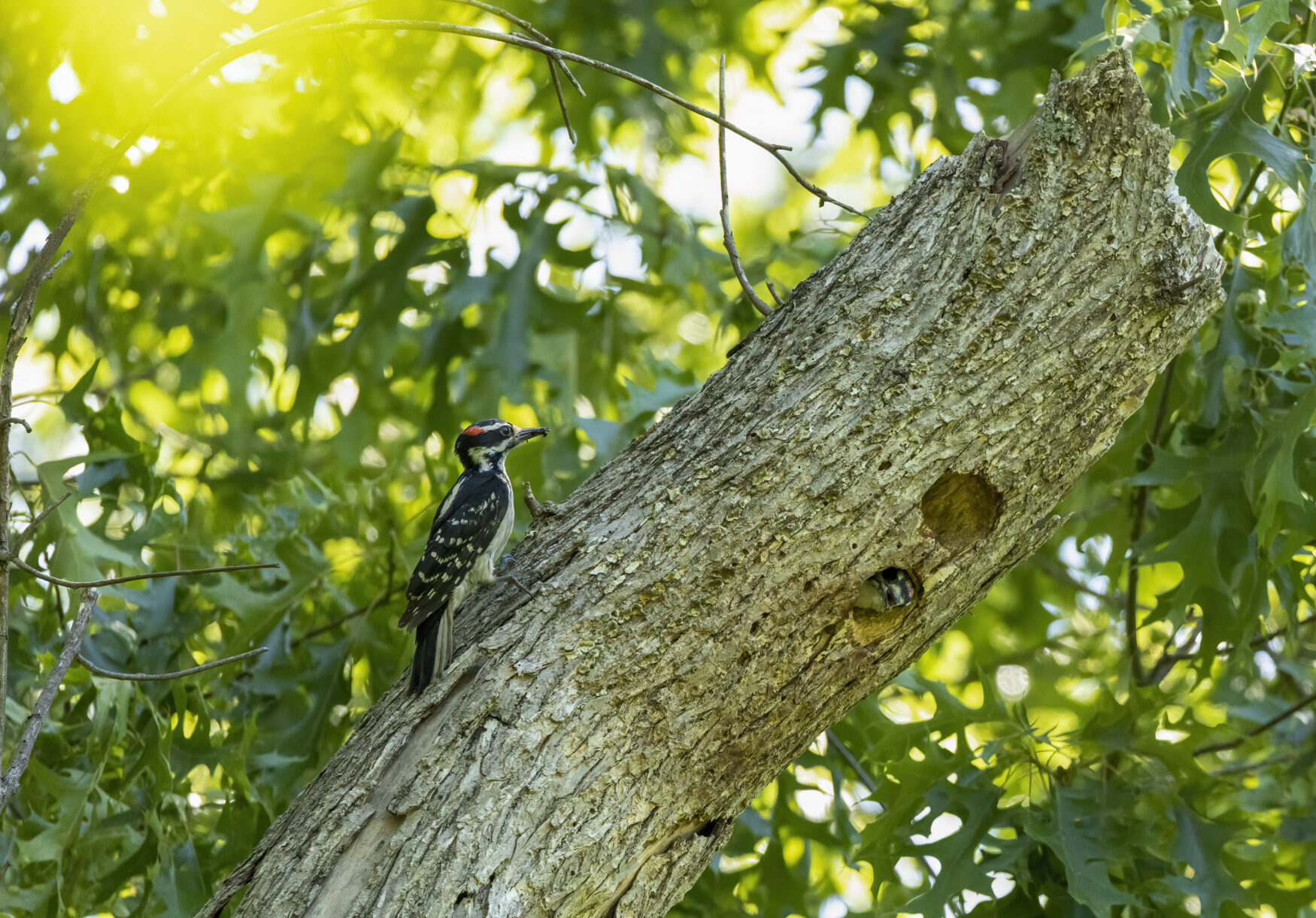
Hairy Woodpecker
nude video Mads-girl nextdoor ur fav brunette
Think twice before cutting down dead trees, they could become home to a feathery friend!
Hairy woodpeckers rely on dead snags for habitat, where they nest and forage by creating holes. To create the cavities, these birds use their bills to strike a tree at about 20 pecks per second! With air pockets that act like shock absorbers around their skulls, they are able to do this without injuring themselves.
Habitat: Hairy woodpeckers (Dryobates villosus) are commonly found in mature forests, backyards, urban parks, or anywhere that has an abundance of large trees. These birds are well known for their excavation skills, and they need to find plenty of dead trees to build their nests because they build new nests each year.
Diet: They feed primarily on insects such as beetles, ants, and caterpillars. At times, they will eat berries, seeds, nuts, and tree sap. They use their chisel- like beak to excavated holes into dead trees and they have long tongues to get into hard to reach places for foraging.
Adaptations: The hairy woodpecker is best identified by its black and white feathers, with two white stripes down its head. Males can be distinguished by the patch of red toward the back of their head.
They exhibit great diversity over their broad range. In the northern part of their range, hairy woodpeckers tend to be larger in size than in the south. Towards the east, they tend to have more white spots on their wings than those found west of the Rockies. In the Pacific Northwest, hairy woodpeckers lack the classic white and black pattern seen elsewhere and instead appear brown and black. One interesting similarity of the hairy woodpecker to its look-alike, the downy woodpecker, is that both species have these same regional variations.