Known for its resilient wood, shagbark hickory (Carya ovata) is able to withstand extreme weather, remaining unscathed during the snow, rain, and wind storms that occur in Massachusetts.
This species grows deep taproot that helps it withstand a variety of ecozones. But its strength doesn’t end there! This tree also evolved hard, tough wood, prized for crafting durable tools like axe handles and drumsticks.
Habitat: Ranging from the Midwestern to Eastern United States, this tree can tolerate a wide range of temperatures. However, it thrives in moist soils within humid climates. It’s rare to find a large group of shagbark hickories. The species is often scattered throughout forests of oaks, pines, and maples.
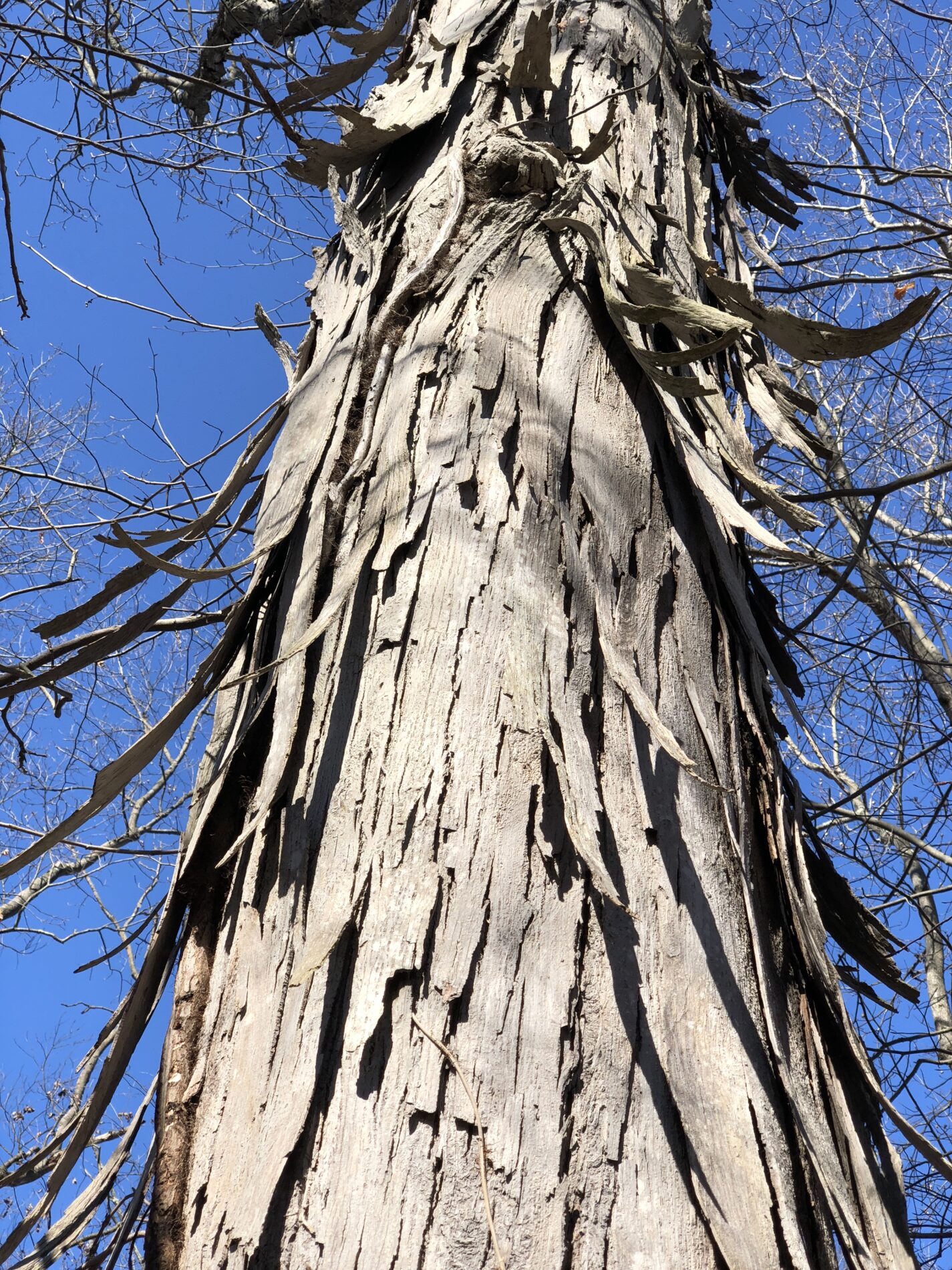
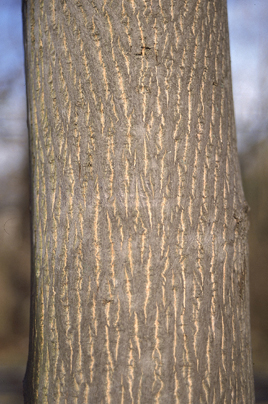
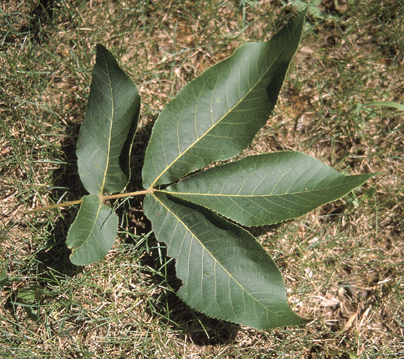
Form and Function: Shagbark hickory is characterized by its long, peeling strips of bark, which it sheds to accommodate diameter growth. Its leaves measure 12 to 24 inches long and are pinnately compound, typically featuring five leaflets attached to a central stalk. The three terminal leaflets are significantly larger than the basal pair. The species averages 60 to 80 feet in height, though some trees exceed 120 feet. It has an average lifespan of 200 years.
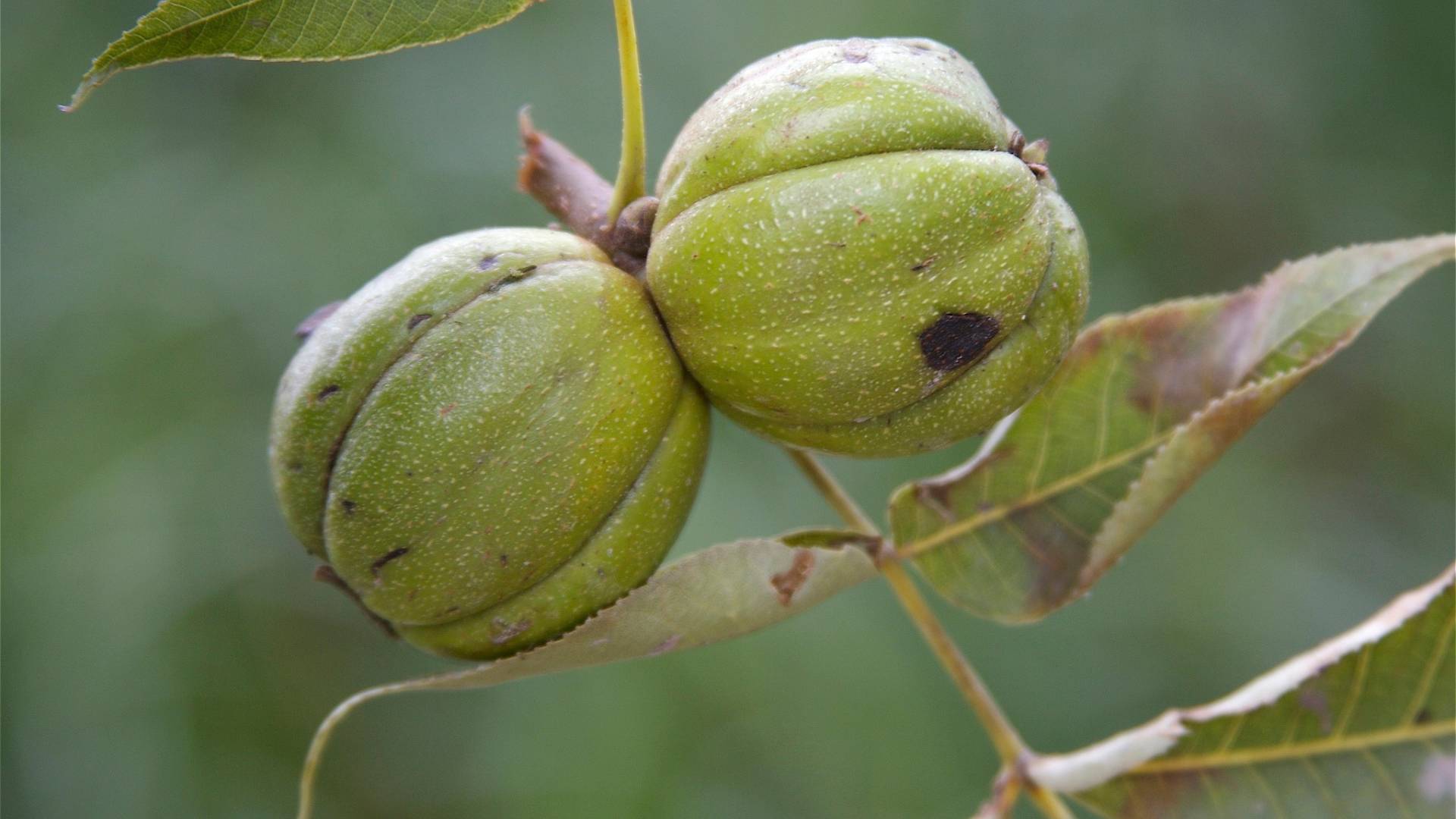
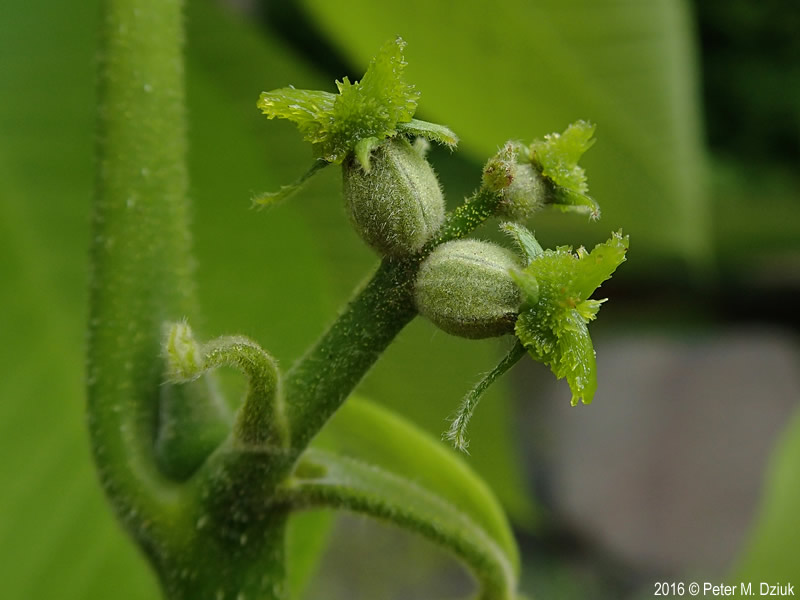
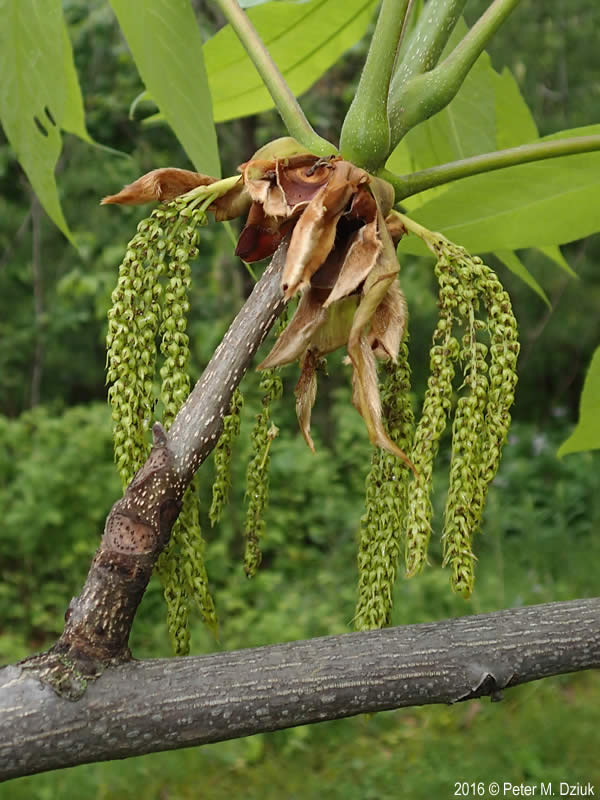
Fruit and flowers: Shagbark hickory produces a fruit that is 1 to 1.5 inches long. It contains an edible nut with a green husk that splits off when ripe in the fall. Although it begins producing seeds at about 10 years of age, the tree does not start producing seeds in large quantities till it reaches maturity at age 40.
Faunal Associations: Shagbark hickory nuts are considered quite sweet, making them a tasty food source for wildlife. Foxes, mice, chipmunks, squirrels, rabbits, and a number of birds enjoy the nuts every fall!
Fun Fact! Shagbark hickory nuts are edible, and can often be used as a substitute for pecans in colder climates. The nuts are a staple in many Indigenous Americans’ dishes, with the kernel milk being used to make dishes like corn cakes and kanuchi.
Can you find any shagbark hickory trees at Hawk Valley Farm? Let us know!
SOURCES:
https://plants.ces.ncsu.edu/plants/caryaovata/
https://www.srs.fs.usda.gov/pubs/misc/ag_654/volume_2/carya/ovata.htm
https://mortonarb.org/plant-and-protect/trees-and-plants/shagbark-hickory/